Stalinska Railway
A Soviet railway (People's Commissariat of Railways), headed in 1944 by Director-General of Traffic of the 2nd rank Mykola Zakorko. Since 1961 and to the present — the Prydniprovska Railway.
Overview
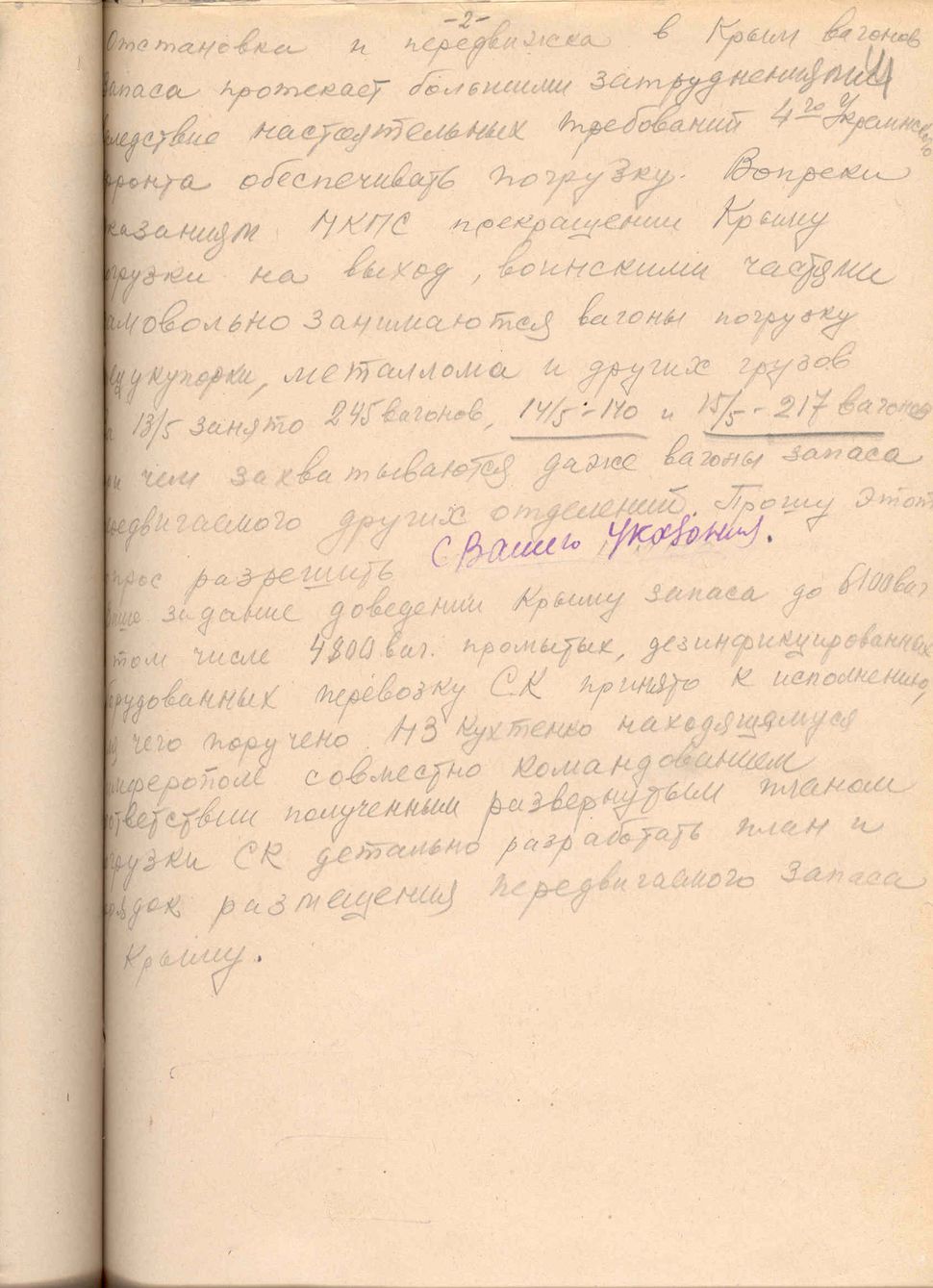
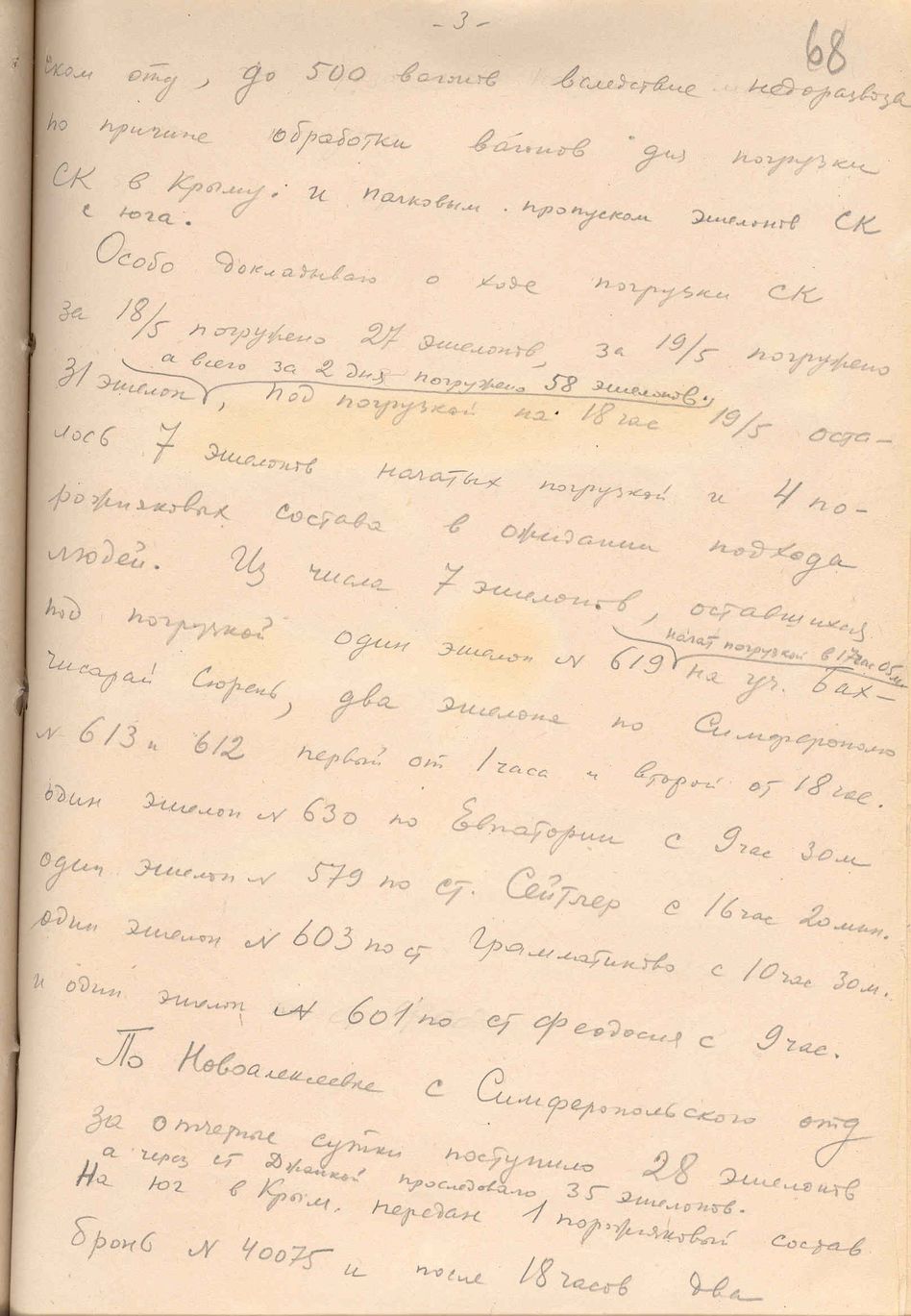
The Stalinska Railway played a key role in providing logistics for the deportation of the Crimean Tatars in May 1944. According to the operational coded telegrams from the head of the railway, Mykola Zakorko, to the People's Commissar of Railways Lazar Kaganovich, the railway accumulated a reserve of rolling stock and suspended the loading of military echelons in favor of the special transports of the Investigation Committee (IC) of the NKVD. The needs of the army, in particular the 4th Ukrainian Front, were relegated to the background.
Key Details / Subtopics
- Leadership (1944): head of the railway — Director-General of Traffic of the 2nd rank Mykola Zakorko; subordinate to the People's Commissar of Railways Lazar Kaganovich.
- Rolling stock preparation: a plan to accumulate up to 6,100 railcars, including 4,800 washed, disinfected, and equipped for the transportation of the IC (as of 16.05.1944).
- Loading pace of the IC echelons: 27 echelons on 18.05.1944, 31 echelons on 19.05.1944 (58 in total over two days); planned completion of the operation — 6:00 on 20.05.1944.
- Control: the head of the railway personally traveled to Crimea on 18.05.1944 at 8:00 to supervise the loading of the IC.
- Legal successor: since 1961 — the Prydniprovska Railway.
- Archival evidence: State Archive of the Dnipropetrovsk Oblast, F. R-2151, Inv. 12, Case 18.
Sources and Links
- Deportation of the Crimean Tatars (source) — operational reports of the Stalinska Railway on the preparation for the deportation.
- Deportation of the Crimean Tatars (1944) — the main event that the railway provided for.
- Deportation of the Peoples of Crimea (1944) — the June deportation of Bulgarians, Greeks, and Armenians, whose special transports were also provided by the railway.
- Sevastopol Railway Junction — another aspect of the railway history of Crimea.
- Crimean Impassability — in 1954 the Crimean lines (800 km) were part of the Stalinska Railway.
- Links between Ukraine and Crimea in the 20th Century — the Stalinska (since 1961 — Prydniprovska) Railway as a component of the transport unity of Crimea with Ukraine; the absence of a separate "Crimean Railway".