Deportation of Crimean Tatars (1944)
The forced expulsion of the entire Crimean Tatar population from the Crimean Peninsula, executed by the Soviet authorities on May 18–20, 1944, under Stalin's orders. Recognized in Ukraine as genocide of the Crimean Tatar people.
Overview
In 1944, the Soviet authorities accused Crimean Tatars of collaboration with the occupational administration ("total collaborationism") and made the decision to deport the indigenous people from their native land. The operation was preceded by a joint decree of the NKVD and NKGB of the USSR of April 13, 1944, "On measures to cleanse the territory of the Crimean ASSR of anti-Soviet elements." Despite appeals from local leadership (specifically regional committee secretary V. Bulatov), who assured of the loyalty of the majority of the Tatar population to Soviet power, on May 11, 1944, Joseph Stalin signed GKO Decree No. 5859ss on organizing the expulsion.
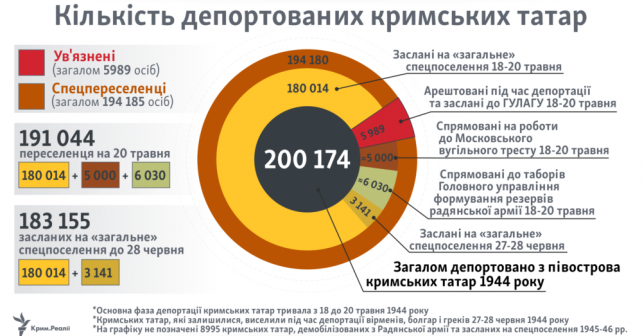
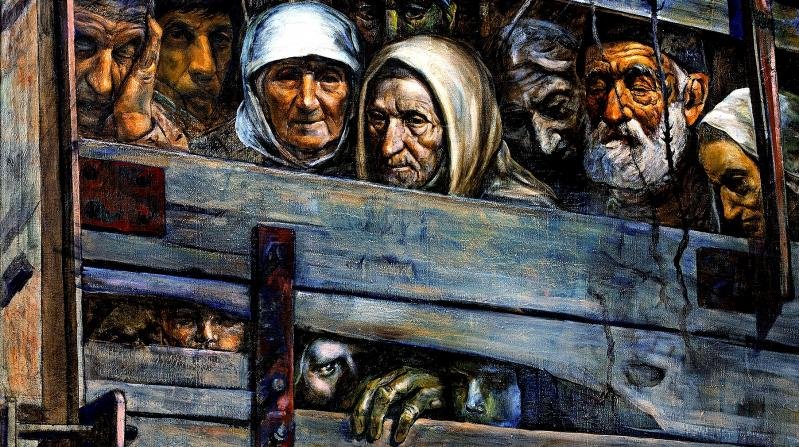
The main phase of the deportation took place on May 18–20, 1944. The remaining representatives of the people left on the peninsula were expelled during the June deportation (June 27–28, 1944) along with Armenians, Bulgarians, and Greeks. The deportees were transported in unfit cattle boxcars where people suffered for weeks from suffocation, overcrowding, hunger, disease, and lack of drinking water. The expulsion also encompassed Red Army veterans, former partisans, and Soviet activists. In exile locations (predominantly in Uzbekistan, as well as Kazakhstan, Tajikistan, the Urals, and Siberia), deportees remained under special settler status (spetsposelentsi) until 1956. Only in 1989 did their mass repatriation to their homeland begin.
Key Details / Subtopics
- Pretext and legal assessment: The official pretext for expulsion was the accusation of "total collaborationism" (GKO Decree No. GOKO-5859 of May 11, 1944). Collective punishment of an entire ethnic group directly violated Article 50 of the 1907 Hague Convention "Respecting the Laws and Customs of War on Land."
- Scale and geography of exile: According to Soviet records, 194,111 Crimean Tatars were expelled; according to estimates of the Crimean Tatar national movement, the number of deportees reached about 423,000. Primary destinations of exile were Uzbekistan, Kazakhstan, Tajikistan, the Mari ASSR, the Southern Urals, and Kostroma Oblast.
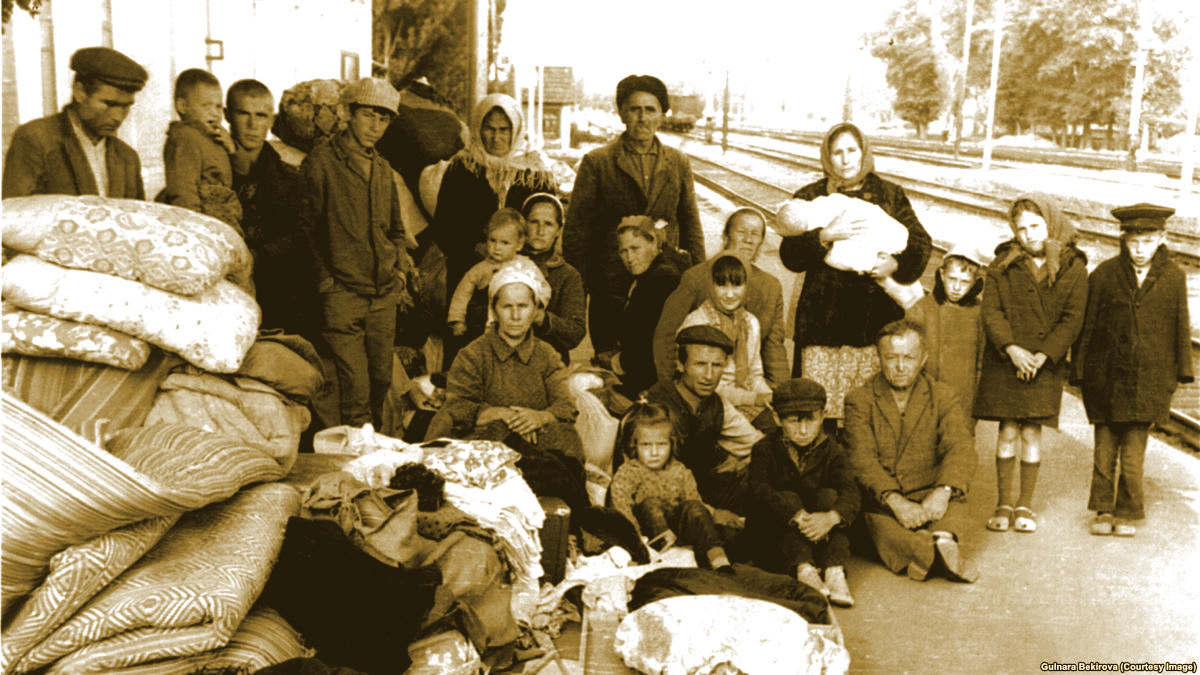
- Course and conditions of expulsion: The expulsion was executed by NKVD troops. Families were given from 5 minutes (in Bakhchysarai) to 15 minutes to pack. Families were permitted to take up to 500 kg of belongings, but in reality everything was limited to hand luggage, with many left without documents. Deportees were transported in cattle boxcars (recently returned from the expulsion of Caucasus peoples, contaminated with blood and excrement).
- Mortality and demographic losses: According to scholars' calculations, about 8,000 people died during transport (whereas official reports noted only 191 deceased). In special settlements, 20–25% of deportees died from hunger and disease (according to self-census data of the Crimean Tatar movement — up to 46%).
- Deportation of military personnel and partisans: Even demobilized Red Army soldiers, evacuees, former partisans (including political instructors of the 5th Partisan Detachment Akhmetov and Isayev), and at least four Heroes of the Soviet Union (decorated for the 1943 Kerch landing) were subject to expulsion.
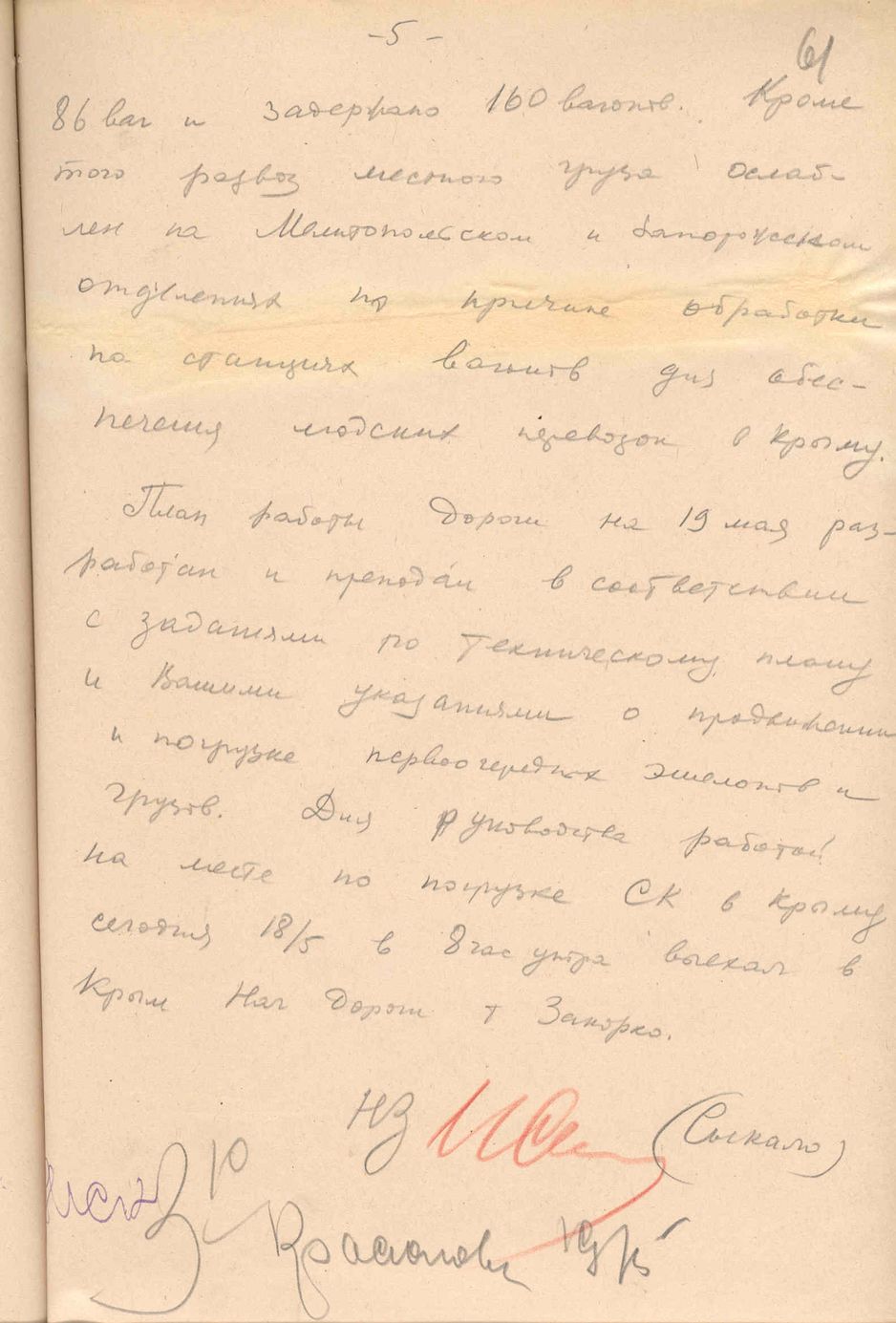
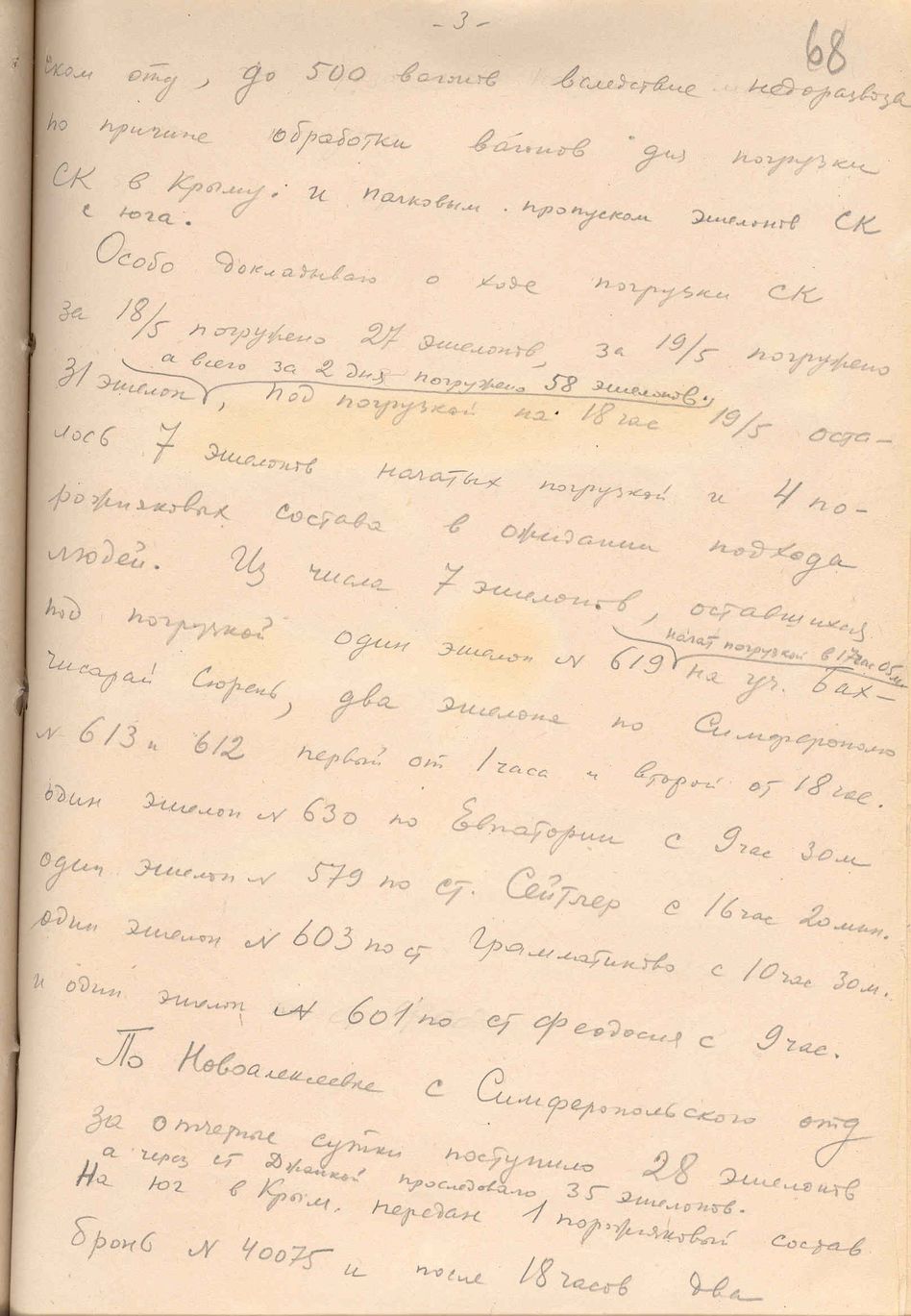
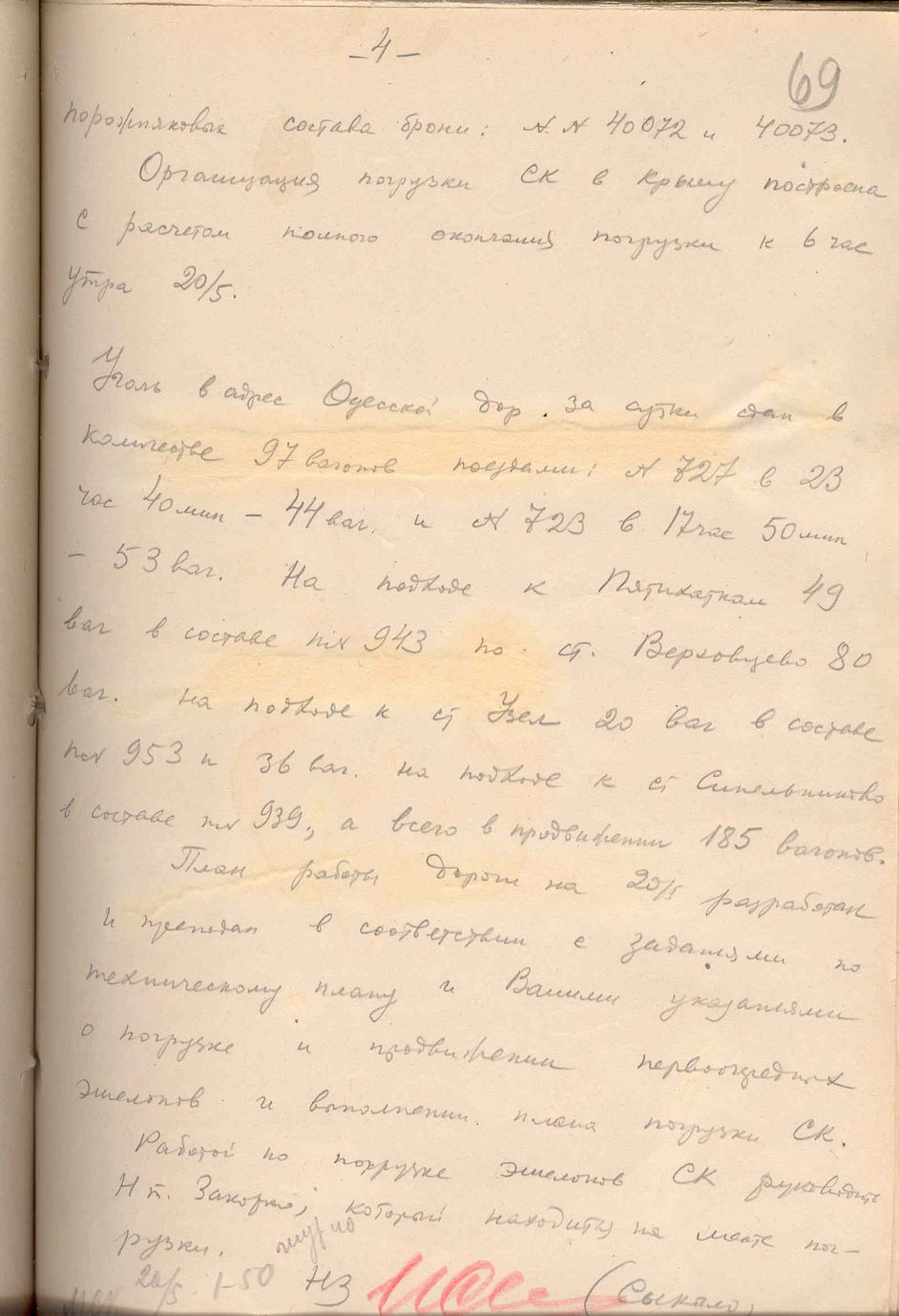
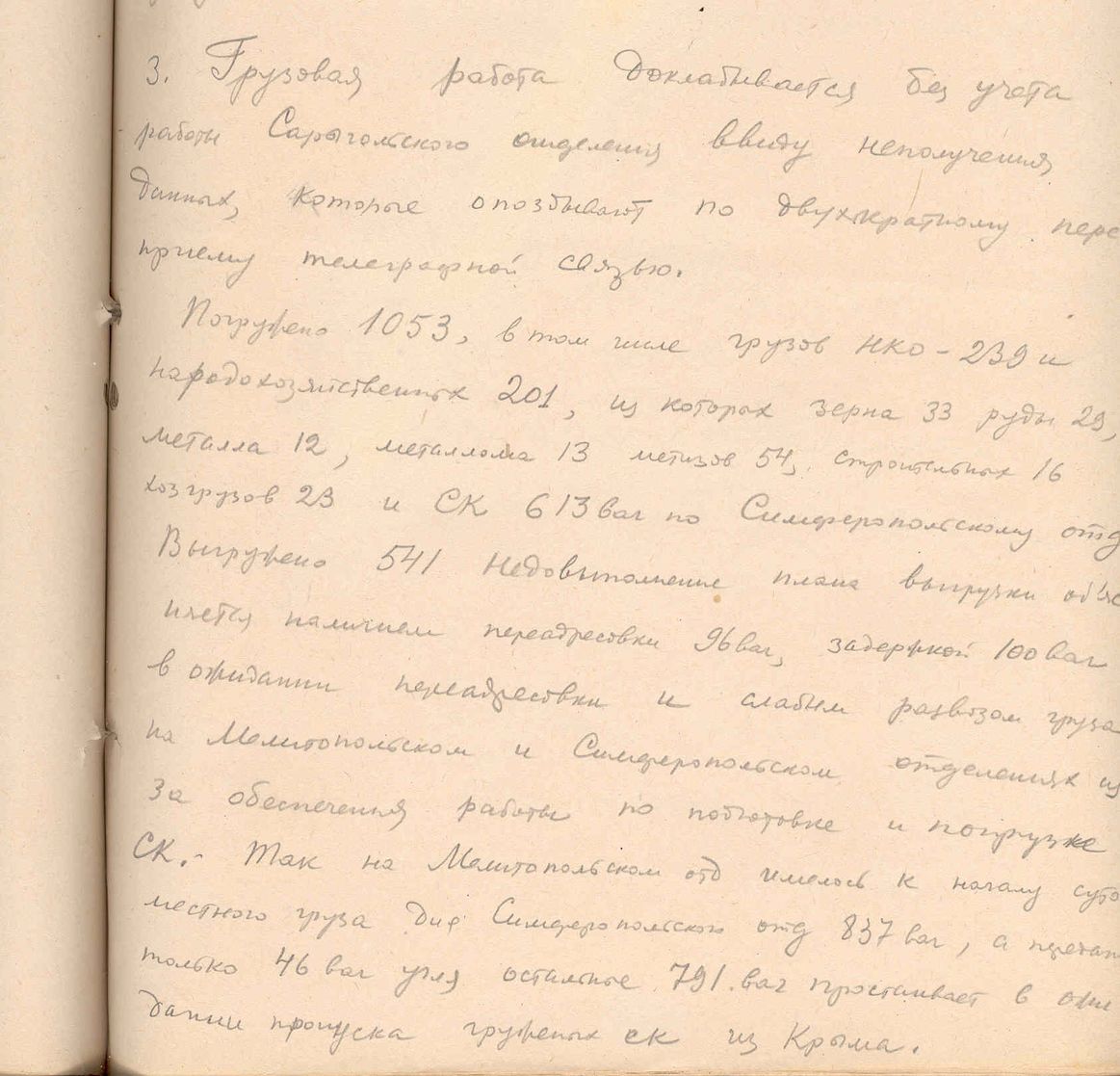
- Railway logistics: Special transports for the Investigative Committee (SK) of the NKVD were provided by the Stalinska Railway under the direction of Mykola Zakorko, who sent operational reports to People's Commissar Lazar Kaganovich.
- Status of special settlers and prohibitions: Survivors until 1956 were considered exiled in perpetuity and had no right to leave special settlements under threat of 20 years of hard labor. Although charges were dropped in 1967, returning to Crimea was forbidden until 1989.
- Consequences and repopulation of the peninsula: Forced expulsion of the indigenous population led to the destruction of traditional irrigated vegetable and truck farming, horticulture, and viticulture. Abandoned orchards and gardens quickly became overgrown with brush. To revive the destroyed agrarian economy, authorities organized the Great Resettlement of Ukrainians to Crimea.
- Present day: Over 25,000 Crimean Tatars are once again forced to seek refuge outside Crimea due to persecution by the russian federation following the 2014 occupation.
Contradictions and Open Questions
- Statistics of deportees and mortality: Soviet official reports present a figure of 191 deaths during transport and 20% to 25% mortality in special settlements. At the same time, research by Ukrainian historians indicates about 8,000 deaths en route, while self-census data of the Crimean Tatar national movement point to the death of up to 46% of deportees. Discrepancies also exist regarding total numbers expelled: from 194,111 individuals according to Soviet documents to 423,000 according to Crimean Tatar movement estimates.
- Accusations of collaborationism: Official Soviet historiography claimed 20,000 deserters among Crimean Tatars, but modern Ukrainian scholars have proven that these figures were deliberately falsified and inflated severalfold by Soviet historians to justify collective punishment, which furthermore was explicitly forbidden by Article 50 of the 1907 Hague Convention.
Sources and Links
- Most Backward Sector in Post-War Crimea — article by Petro Volvach on the destructive impact of deportation on vegetable growing and horticulture.
- Deportation of Crimean Tatars (Source) — article of the project "Crimea Is Ukraine" based on archival cipher telegrams.
- The Day the Sky Cried (Source) — article by Tetiana Bykova on prerequisites, course, and demographic consequences of the deportation.
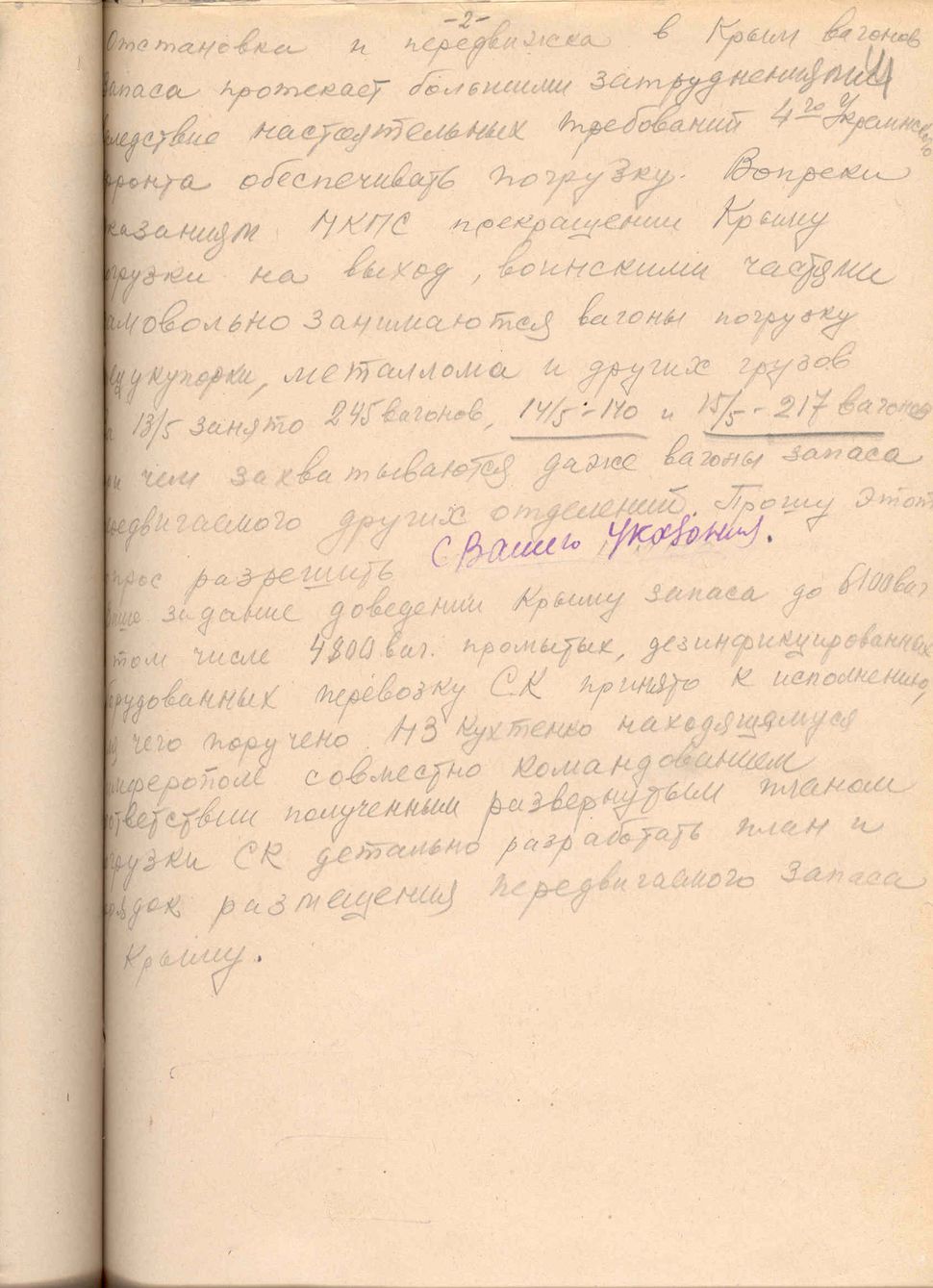
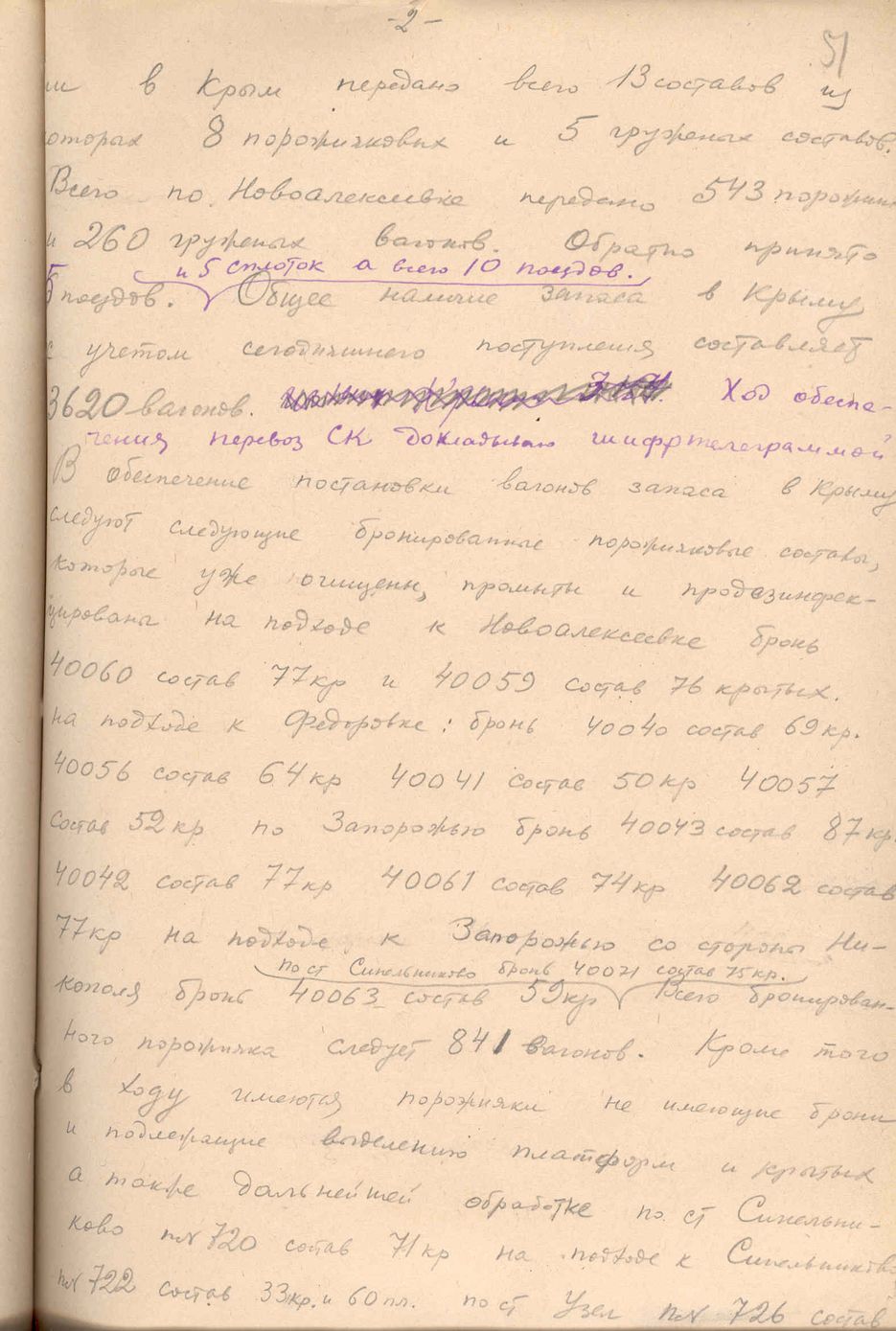
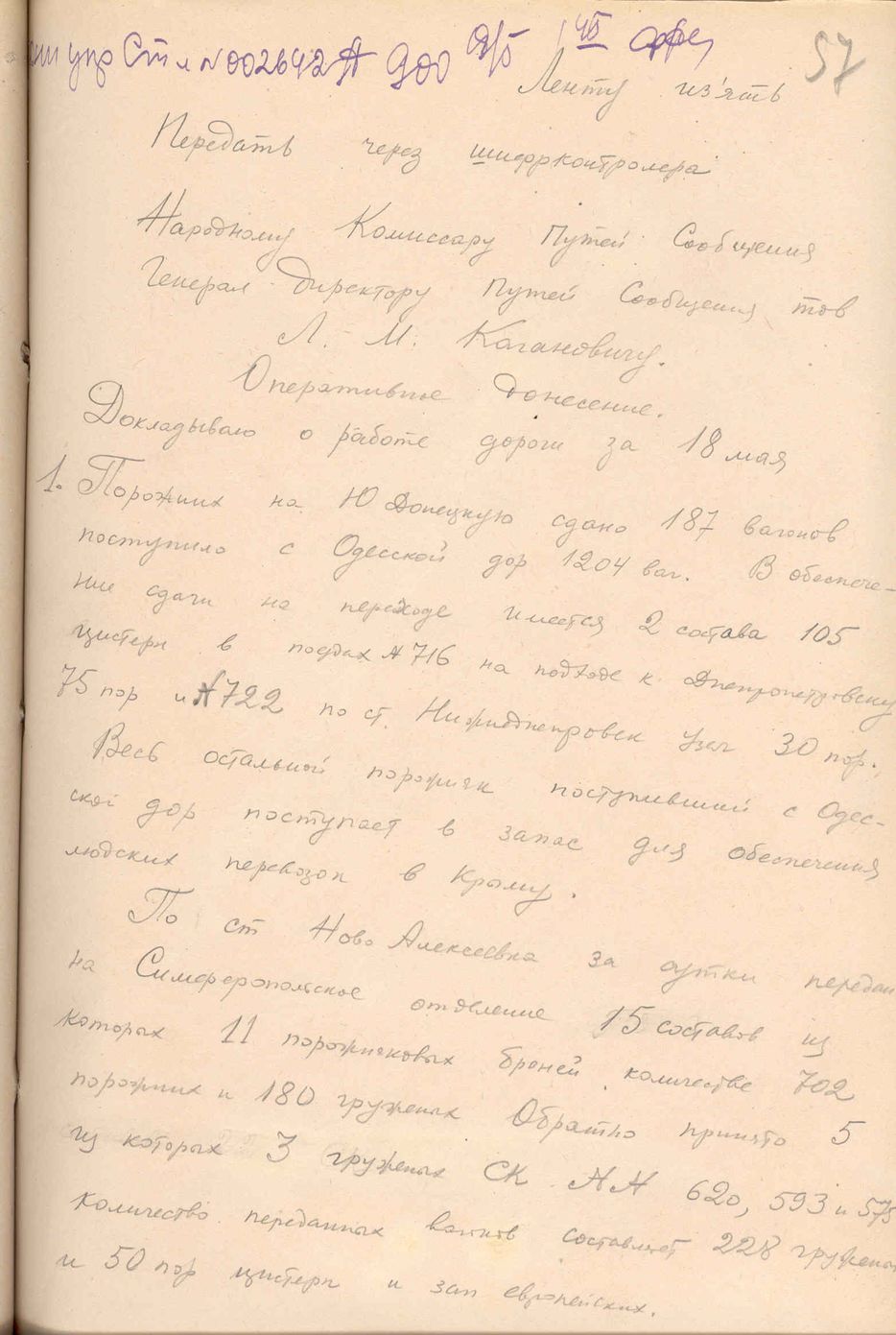
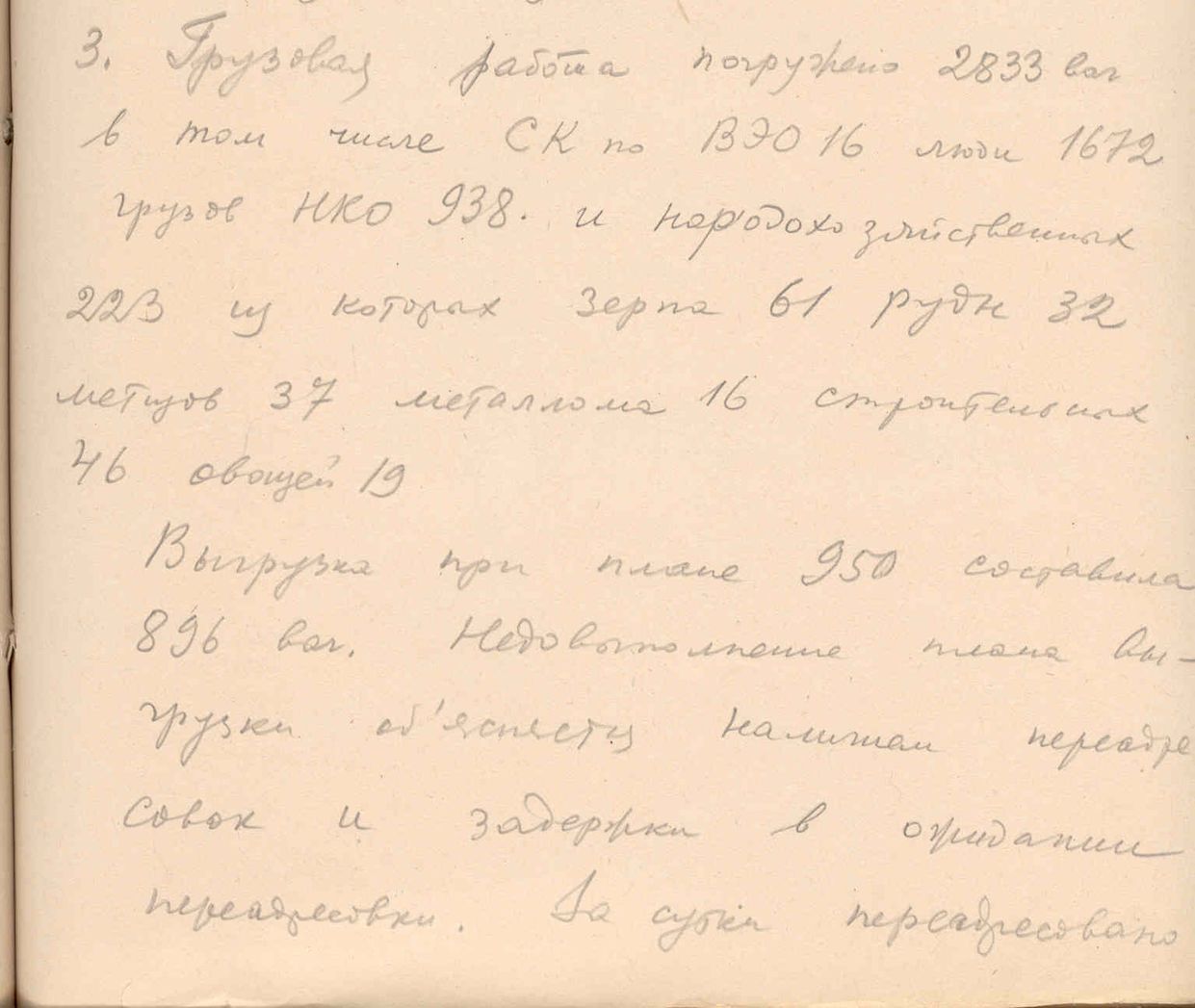
- Stalinska Railway — railway providing rolling stock for SK special transports.
- Mykola Zakorko — head of the Stalinska Railway, personally supervised train loading.
- Lazar Kaganovich — USSR People's Commissar of Communication Routes, recipient of reports.
- Crimean Autonomous Soviet Socialist Republic (1921–1945) — 1944 deportation liquidated Crimean ASSR established in 1921 (context of 1925 article on ethnic composition of the republic).
- Crimea Is Ukraine (Project) — source of publication.
- Great Resettlement of Ukrainians to Crimea — process of rebuilding Crimea through Ukrainian settlers after deportation of indigenous peoples.
- Crimean Tatars in Kherson Region (History of Settlement) — Article on Crimean Tatar settlement in Kherson Region — direct continuation of 1944 deportation topic.
- Greeks in Crimea — ethnic group deported in 1944 as part of the "June" deportation of Crimean peoples (together with Bulgarians and Armenians).
- Bulgarians in Crimea — ethnic group deported in June 1944 deportation together with Crimean Tatars, Armenians, and Greeks.
- Deportation of Peoples of Crimea (1944) — June deportation of Bulgarians, Greeks, and Armenians (GKO Decree No. 5984) as "additional" to the expulsion of Crimean Tatars.
- Battle for Crimea (1941–1942) — article traces connection of 1942 events and population attitudes in Crimea with subsequent accusations of Crimean Tatars of collaboration and 1944 deportation.
- Ethnogenesis of Crimean Tatars — origin and formation of Crimean Tatar people as indigenous population of Crimea.
- russification of Ukrainians of Crimea — 2014 occupiers' census: comparison of demography of Ukrainians (average age 48 years) and Crimean Tatars (35 years).