Georgians in Crimea
Georgians — one of the ancient and yet understudied ethnic groups of Crimea: chronicle and archaeological data record ties between the peninsula and Georgia since ancient times, while in modern times the Georgian community of Crimea has left a noticeable trace in ecclesiastical, military, and public life, and following the 2014 occupation found itself under pressure of russification.
Overview
The exact time of the appearance of Georgians in Crimea is unknown. Candidate of Historical Sciences, Associate Professor Oleksandr Muzychko notes that the history of Georgians in Crimea has been researched neither fragmentarily nor comprehensively, while chronicle and archaeological data testify to relations between Crimea and Georgia since ancient times. In the 18th century, Georgians escaping Crimean captivity joined the ranks of Cossacks of the Zaporozhian Sich. According to ethnographer Oleksandr Rybalko and O. Muzychko, Georgians were among the Christian population of Crimea deported in 1778–1780 to Northern Pryazovia: over two hundred Georgians were deported from the peninsula at that time.
At various stages of Crimean history, prominent figures of Georgian origin left their mark — from city governors of Kerch and Yalta to the Archbishop of Taurida. A separate chapter is formed by the contribution of Georgians to the liberation of Crimea in World War II: 700,000 people were mobilized from Georgia, and in the battles for Kerch every third Georgian soldier died or went missing.
Key Details / Subtopics
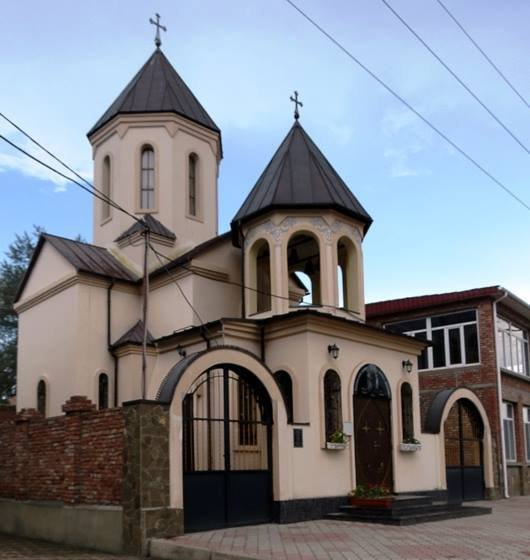
- Church of St. Nino in Kerch: church in honor of St. Nino, Christian enlightener of Georgia, belongs to the Georgian Orthodox Church (GOC) — parish in Kerch, apparently the only one on the peninsula. Nearby stands the House of the Georgian Diaspora. On May 9, 2012, the church (construction of which was blessed by Catholicos-Patriarch of the GOC Ilia II) was consecrated by Metropolitan Seraphim (Jojua) of Borjomi and Bakuriani of the GOC. The church was built on donations from the Georgian community of Ukraine and Crimea in memory of compatriots who fell in World War II. Prior to the 2014 occupation, it became one of the symbols of Georgian presence in Crimea.
- Georgians in World War II: in the early 1940s, 700,000 people were mobilized from Georgia, half of whom did not return. In the battles for Kerch during the creation of national military formations, every third Georgian soldier died or went missing; Soviet command dispatched troops to Crimea completely unprepared.
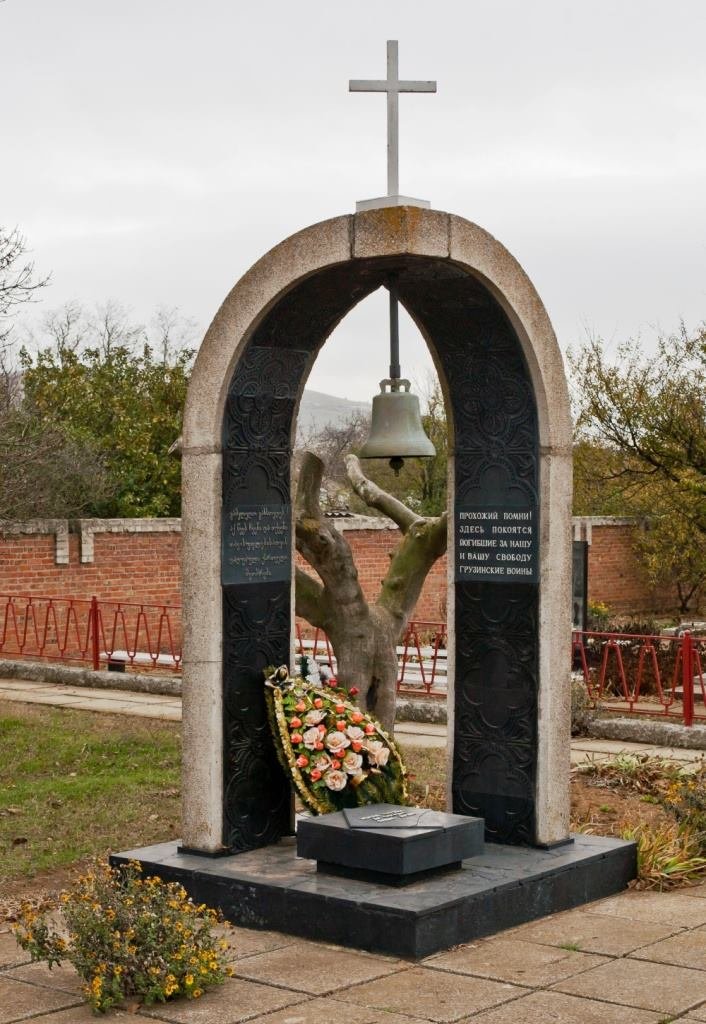
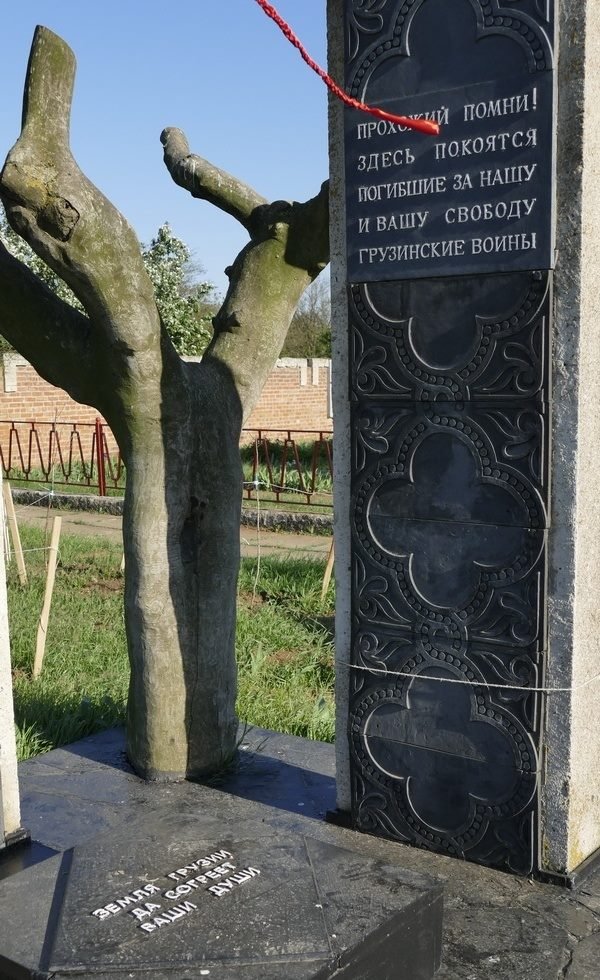
- Memorials: on June 13, 1992, in the village of Hlazivka near Kerch, a monument to soldiers of the Georgian division was opened (capsule with soil of Georgia at the base); in 1961 near Sapun Mountain near Sevastopol a memorial-necropolis was erected in memory of heroes of the 414th Georgian Rifle Division who fell liberating the city in May 1944.
- Vakhtang Kikabidze: famous Georgian artist visited the Kerch memorial a few years before the occupation; his father, Junior Lieutenant Konstantin Kikabidze, went missing in 1942 in those parts. In 2008 he refused the Order of Friendship of Peoples of the rf in protest against russia's invasion of Georgia, and in 2014 expressed regret at not being able to join the Revolution of Dignity and ATO.
- Prominent Georgians of Crimea: Prince Zakharia Kherkheulidze — city governor of Kerch (1833–1850); Ivan Dumbadze — city governor of Yalta (1906–1916), monarchist and Black Hundred member; engineer Mikheil Gersevanishvili — builder of ports of Kerch, Yalta, and Feodosia (late 19th c.); Archbishop of Taurida Dimitry (Abashidze, 1912 — until Bolshevik conquest; canonized in 2011); General Zurab Natiyev (Natiyev, real surname Natishvili) — commander of the Zaporozhian Corps of the UNR Army in the campaign to Crimea (April 1918), Adjarian by origin.
- Demographics: according to the russian empire census of 1897, 266 Georgians lived in Taurida Governorate (125 in Sevastopol, 58 in Kerch, 11 in Simferopol). In Soviet registers Georgians fell into "Other Nationalities": 1926 — 201, 1939 — 509, 1970 — 1,112. According to the All-Ukrainian Census of 2001 — about 1,800 (O. Muzychko specifies 1,774). After occupation, the russian census of 2014 recorded 1,571 Georgians.
- Community and institutions: during Ukraine's independence, one of the four Georgian national-cultural societies operated in Crimea. From 2002 to 2011, the Honorary Consulate of Georgia operated in Yalta (headed by Elguja Kepuladze — honorary citizen of AR Crimea and Yalta, organizer of pro-Ukrainian festivals "Lesya's Autumn", "Charming Necklace"). In 1990–1993 the Crimean Georgian Community formed (740 members at registration in 1993, branches in Kerch, Feodosia, etc.). On June 14, 1995, in Yevpatoria, the organization "Ertoba" ("Unity") was registered, whose leadership in March 2014 called for a boycott of the "referendum" initiated by separatists. Georgian children studied at the Ukrainian Gymnasium in Simferopol alongside Ukrainian, russian, Crimean Tatar, and Armenian children.
Contradictions and Open Questions
- Scale of history: unlike Greeks or Bulgarians, the history of Georgians in Crimea remains fragmentarily researched; O. Muzychko emphasizes the lack of both comprehensive and fragmentary studies.
- Demographic discrepancies: the All-Ukrainian Census of 2001 presents about 1,800 Georgians, whereas O. Muzychko clarifies the number to 1,774.
Sources and Links
- Pages of Crimean History in Georgian Script — article by Serhiy Konashevych in the newspaper Krymska Svitlytsia (2017, No. 18); main source.
- Deportation of Peoples of Crimea (1944) — Georgians were among Crimean Christians deported to Northern Pryazovia in 1778–1780 (over two hundred persons).
- Greeks in Crimea — related Christian ethnos of Crimea, resettled in 1778 to Pryazovia together with Georgians and other Christians.
- Bulgarians in Crimea — related ethnos of Crimea, deported in 1944.
- Crimean Orthodox Eparchy — St. Nino Church in Kerch belongs to the Georgian Orthodox Church, distinct from Moscow Patriarchate.
- Yalta — city where the Honorary Consulate of Georgia operated in 2002–2011.
- Crimea Is Ukraine (Project) — source of publication of the primary article.
- Italians in Crimea — related ethnos of multinational Crimea that also suffered Soviet repressions and deportation.
- Destroyed Churches of Kerch — among modern confessional churches of Kerch the Georgian church is mentioned.