Deportation of the Peoples of Crimea (1944)
The forced exile of Bulgarians, Greeks, and Armenians from the Crimean ASSR on June 27, 1944 (the so-called "June deportation" under USSR State Defense Committee Decree No. 5984) was part of the Soviet campaign of ethnic cleansing on the peninsula, as well as the historical resettlement of Crimean Christians to the Azov region in 1778.
Overview
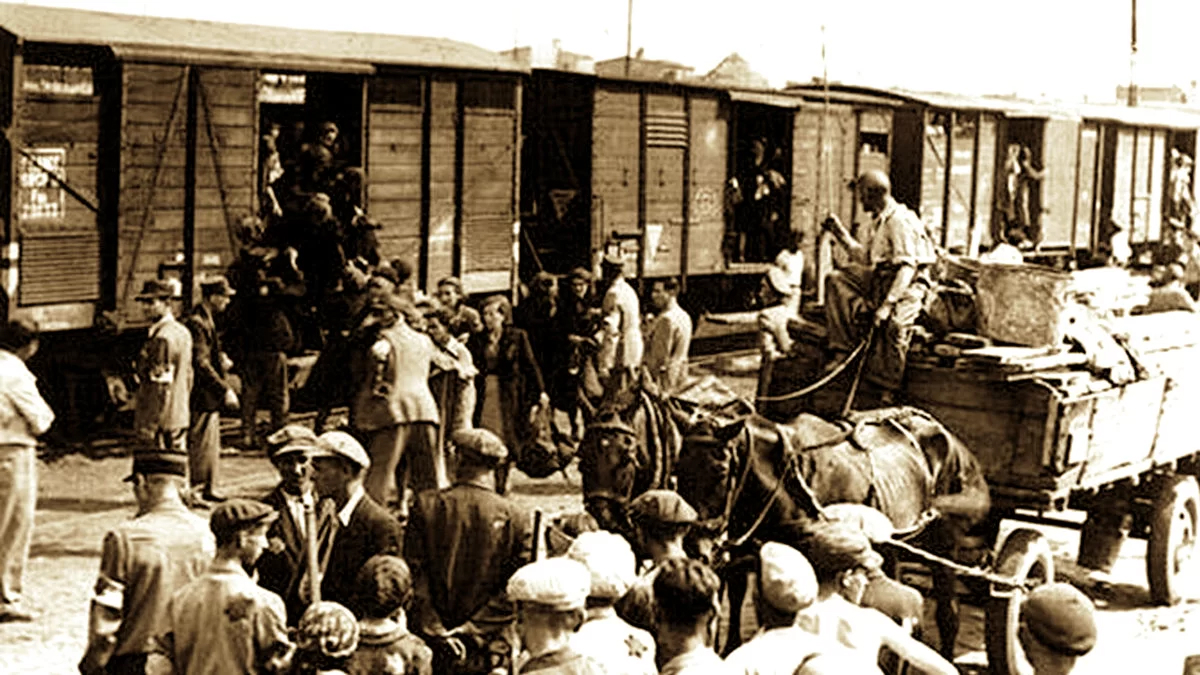
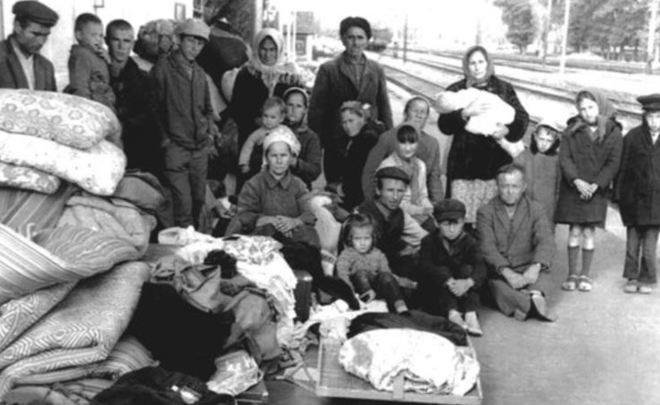
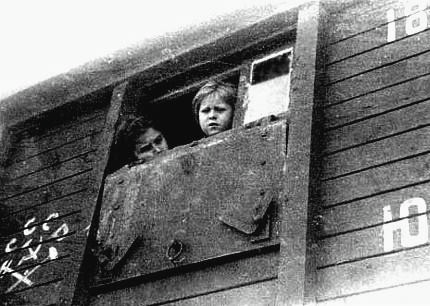
On June 27, 1944, Decree No. 5984 of the USSR State Defense Committee (GKO), signed on June 2 and personally prepared by Stalin, was executed: "In addition to the exile under GKO Decree No. 5859ss of May 11, 1944 of Crimean Tatars, deport 37,000 German accomplices among Bulgarians, Greeks, and Armenians from the territory of the Crimean ASSR." In fact, the state security organs deported nearly 37,500 people — to the Urals, Siberia, and Kazakhstan. People were awakened at dawn, read the decree, ordered to gather their belongings, and their doors were sealed.
For Greeks and Armenians, this marked their second expulsion from the peninsula. The first occurred in 1778 under Catherine II: Commander Pyotr Rumyantsev-Zadunaysky justified the resettlement by the need to develop lands under the Treaty of Küçük Kaynarca, weaken the economy of the Crimean Khanate ahead of its annexation, and "save Christians from Muslim oppression." In June 1778, Crimean Christians signed a resolution on "voluntary" resettlement to the Azov region (30 desyatins of land per male family member); under the supervision of Alexander Suvorov's troops, they left Crimea and by late 1779 founded Mariupol and nearly two dozen villages bearing Crimean names (Yalta, Laspi, Mangush, Staryi Krym).
The second (Soviet) expulsion was prepared through population registration. In late May 1944, Lavrentiy Beria, in a report to Stalin, labeled the Bulgarians, Greeks, and Armenians of Crimea as "accomplices of the occupiers." On July 5, 1944, Beria reported on "cleansing the territory of Crimea of anti-Soviet espionage elements" and the deportation of Crimean Tatars, Bulgarians, Greeks, Armenians, and foreign nationals. Researcher Ivan Dzhukha notes with irony that blaming entire peoples for "treason" was baseless, as the population could not all join the partisans and was forced to survive under occupation conditions.
The deportees were settled in abandoned buildings and basements; they were allowed to bring 15–20 kg of belongings. As a result of war, occupation, and deportation, the population of Crimea shrank by two-thirds (379,000 in autumn 1944 compared to 1,126,426 in 1939). In 1945 and 1948, over 90% of settlements with Crimean Tatar, German, Greek, and Armenian names were renamed; on November 27, 1944, Tyulyayev, secretary of the Crimean Regional Committee of the All-Union Communist Party (Bolsheviks), directly stated the goal — "to make Crimea new, with a russian character." The return of a portion of the deportees became possible only from the mid-1950s to the late 1980s.
Key Details / Subtopics
- Legal Basis: USSR GKO Decree No. 5984 of June 2, 1944 (executed June 27) — "in addition" to the deportation of Crimean Tatars (No. 5859ss of May 11, 1944).
- Scale: planned — 37,000 people; actually deported — nearly 37,500 Bulgarians, Greeks, and Armenians to the Urals, Siberia, and Kazakhstan.
- Execution of Deportation: awakening at dawn, reading of the decree, sealing of doors; permission to take 15–20 kg of belongings; housing in unrenovated buildings and basements (several families per room); mass disease due to climate change and lack of medical care.
- Separated Families: NKVD directive "On Reconnecting Separated Families of Crimean Bulgarians, Greeks, and Armenians" existed — demobilized soldiers were sent to their deported families.
- Historical Precedent (1778): first resettlement of Crimean Christians to the Azov region under Alexander Suvorov's supervision; founding of Mariupol and villages bearing Crimean names.
- Ethnic Cleansing: renaming over 90% of toponyms (1945, 1948) and the declaration "Crimea — new, with a russian character" (Tyulyayev, 1944).
- Demographic Impact: Crimea's population shrank threefold; the economy recovered only by the 1960s.
- Deportation of Crimean Germans (August 1941): preventive deportation under the guise of "evacuation" starting August 15, 1941 (over 60,000 people deported to Stavropol, Rostov Oblast, and subsequently to Siberia and Kazakhstan in the Labor Army). The official phrasing "evacuation" created bureaucratic obstacles for restoring victims' rights after 2014 under russian occupation.
- Laki (Local Dimension): on June 27, 1944, Crimean Greeks of Laki village (Bakhchysarai District) were deported to Central Asia and the Urals; earlier, in 1778, 412 Orthodox Christians (including 6 priests) were expelled from Laki as part of 31,000 deportees from Crimea. Following deportation, on August 12, 1944, a resolution was adopted on resettling collective farmers; families from Oryol and Bryansk Oblasts arrived in Laki; in 1948 it was renamed Horyanka.
Contradictions and Open Questions
- Validity of Accusations: Soviet authorities imposed collective blame of "accomplices of the occupiers" on entire ethnic groups (young and old alike), whereas researchers (Ivan Dzhukha) prove the impossibility of universal collaboration and the fabricated nature of the charges.
- Demographic Data: the source presents the threefold decline in Crimea's population (1,126,426 in 1939 → 379,000 in 1944) as the combined result of war, occupation, and deportation — without separating the contribution of each factor.
Sources and Links
- "New Crimea with a russian Character": Deportation of the Peninsula's Ancient Peoples — article by Ihor Svitlychanyn in Krymska Svitlytsia (2017, No. 26), main source.
- 445 Meters Above Sea Level of Solitude — article by Roza Krymska (Krymska Svitlytsia, 2018, No. 39): deportation of the Greeks of Laki on June 27, 1944, 1778 figures from Laki, settlement from Oryol and Bryansk Oblasts.
- Germans of Crimea - Who Are They? — article by Valeriy Verkhovskyy (Krymska Svitlytsia, 2017, No. 13) on the 1941 deportation/"evacuation" of Crimean Germans.
- Germans in Crimea — concept on Crimea's German community, 19th-century colonization, and forced expulsion in 1941.
- Laki (Village) — local case of double expulsion of Greeks (1778, 1944) and the disappearance of the village.
- Deportation of Crimean Tatars (1944) — main wave of deportation (May 18–20, 1944), to which Bulgarians, Greeks, and Armenians were "additionally" exiled.
- Bulgarians in Crimea — ethnic group expelled during the June 1944 deportation alongside Greeks and Armenians.
- Greeks in Crimea — ethnic group expelled during the June 1944 deportation alongside Bulgarians and Armenians.
- Georgians in Crimea — Georgians were also among the Crimean Christians deported to Northern Azov in 1778–1780 (over two hundred people).
- Battle for Crimea (1941–1942) — events of 1941–1942 and accusations of Crimean peoples collaborating as a precondition for deportations.
- Great Resettlement of Ukrainians to Crimea — post-war repopulation of the peninsula following the deportation of indigenous and other peoples.
- Food Situation of Crimea in the Post-War Decade (1944–1954) — long-term economic and food consequences of the deportation of Crimean peoples.
- Crimean (Eastern) War of 1853–1856 in the Kherson Region — emigration of Crimean Tatars after the Eastern War caused one of the waves of Bulgarian migration to Crimea.
- Crimea is Ukraine (Project) — publication source of the article.
- Lazar Kaganovich — USSR People's Commissar of Communication Routes, recipient of reports on deportation preparations.
- Stalinska Railway — provided rolling stock for NKVD special transports.
- Andriy Shchekun — editor-in-chief of Krymska Svitlytsia newspaper where the article was published.
- St. George the Dragon-Slayer — historical 1778 resettlement of Crimean Christians: it was then that the 11th-century icon "St. George" was taken from St. George Monastery at Cape Fiolent to Mariupol.
- Metropolis of Gothia and Caffa — on the initiative of the last Metropolitan, Ignatios (Gozadinos), in 1778 Crimean Christians petitioned for resettlement to the Azov region (led by Suvorov), initiating the founding of Mariupol.
- Crimean Autonomous Soviet Socialist Republic (1921–1945) — the 1944 deportation liquidated the Crimean ASSR; 1925 article on its national composition and government (prior to the exile of Bulgarians, Greeks, and Armenians).
- Italians in Crimea — in February 1942, Italians from "liberated territory" were deported to Kazakhstan, like Germans, ahead of the general deportations.